Chord Progression Chart
The most common chord progressions written out in all 12 keys, major and minor, with the chords of every key and how to play them. Download it, print it, or click any chord in the table to hear it with a band.
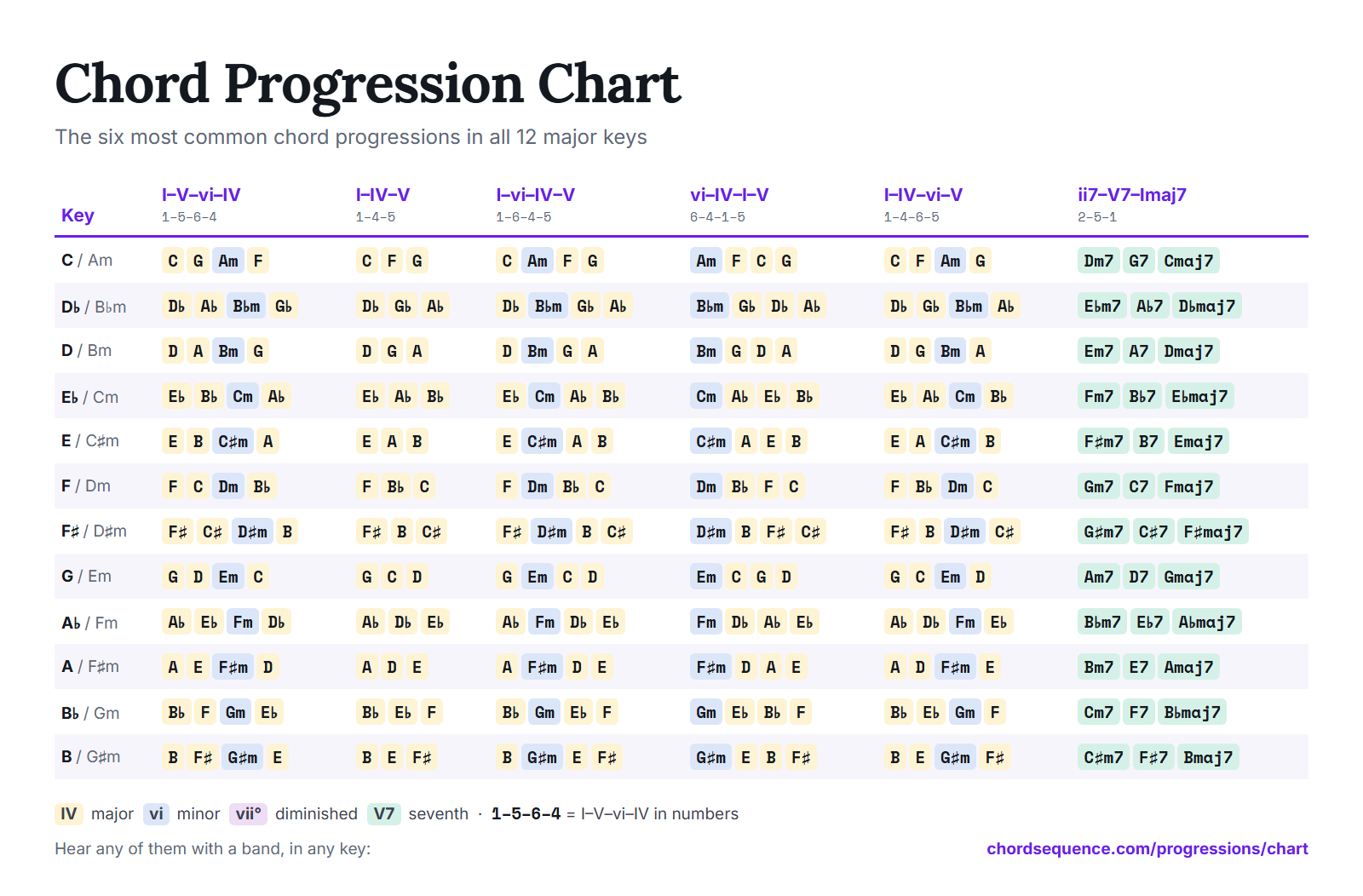
Common chord progressions in every major key
Read across for one key, down for one progression. Each key's relative minor is beside it.
IV uppercase: major vi lowercase: minor vii° diminished 1–5–6–4 the same in numbers How to read the numerals
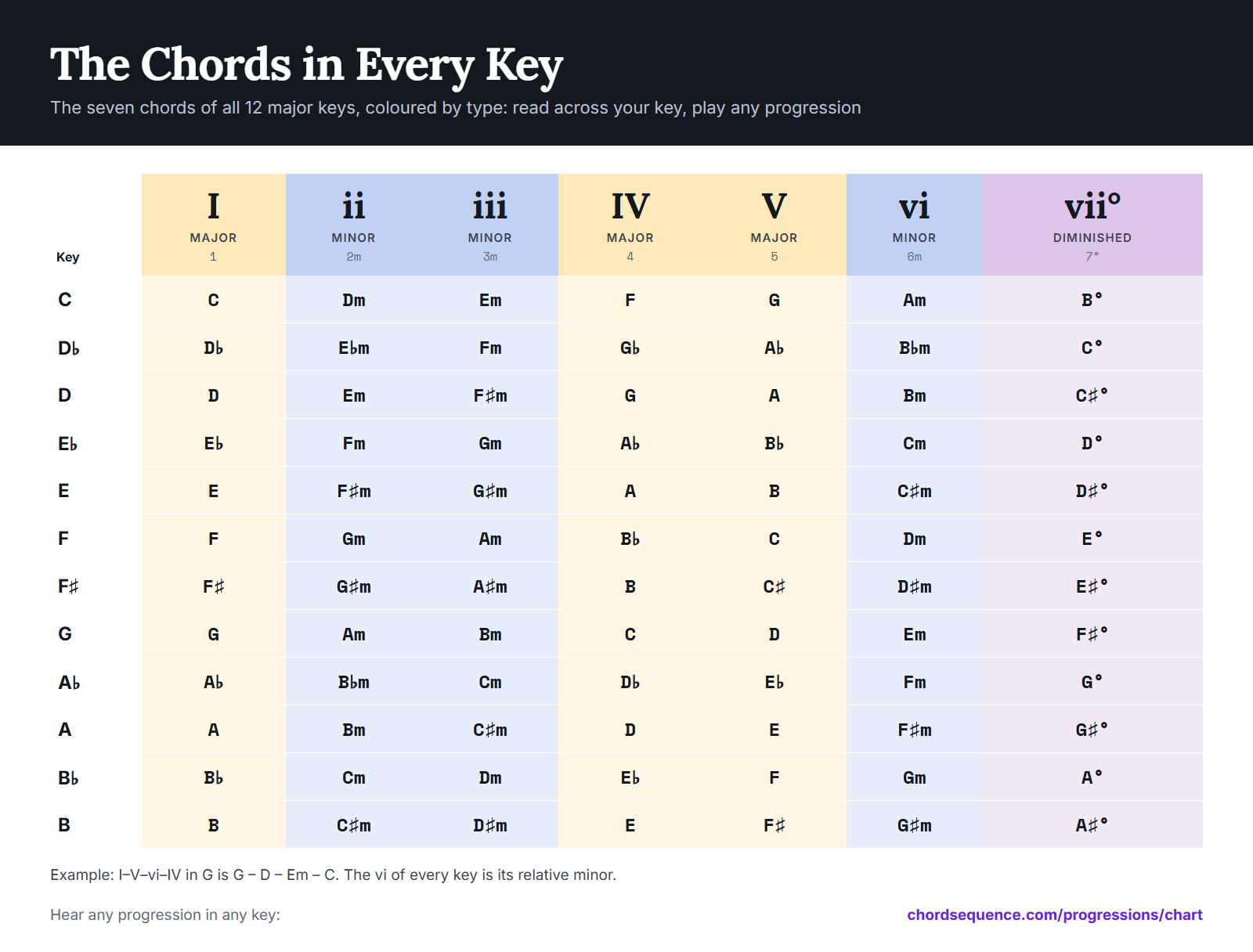
The chords in every key
Every progression is built from these seven chords. Amber chords are major, blue minor, purple diminished; a major key's vi is its relative minor.
| Key | I Major | ii Minor | iii Minor | IV Major | V Major | vi Minor | vii° Diminished |
|---|---|---|---|---|---|---|---|
| C | C | Dm | Em | F | G | Am | B° |
| D♭ | D♭ | E♭m | Fm | G♭ | A♭ | B♭m | C° |
| D | D | Em | F♯m | G | A | Bm | C♯° |
| E♭ | E♭ | Fm | Gm | A♭ | B♭ | Cm | D° |
| E | E | F♯m | G♯m | A | B | C♯m | D♯° |
| F | F | Gm | Am | B♭ | C | Dm | E° |
| F♯ | F♯ | G♯m | A♯m | B | C♯ | D♯m | E♯° |
| G | G | Am | Bm | C | D | Em | F♯° |
| A♭ | A♭ | B♭m | Cm | D♭ | E♭ | Fm | G° |
| A | A | Bm | C♯m | D | E | F♯m | G♯° |
| B♭ | B♭ | Cm | Dm | E♭ | F | Gm | A° |
| B | B | C♯m | D♯m | E | F♯ | G♯m | A♯° |
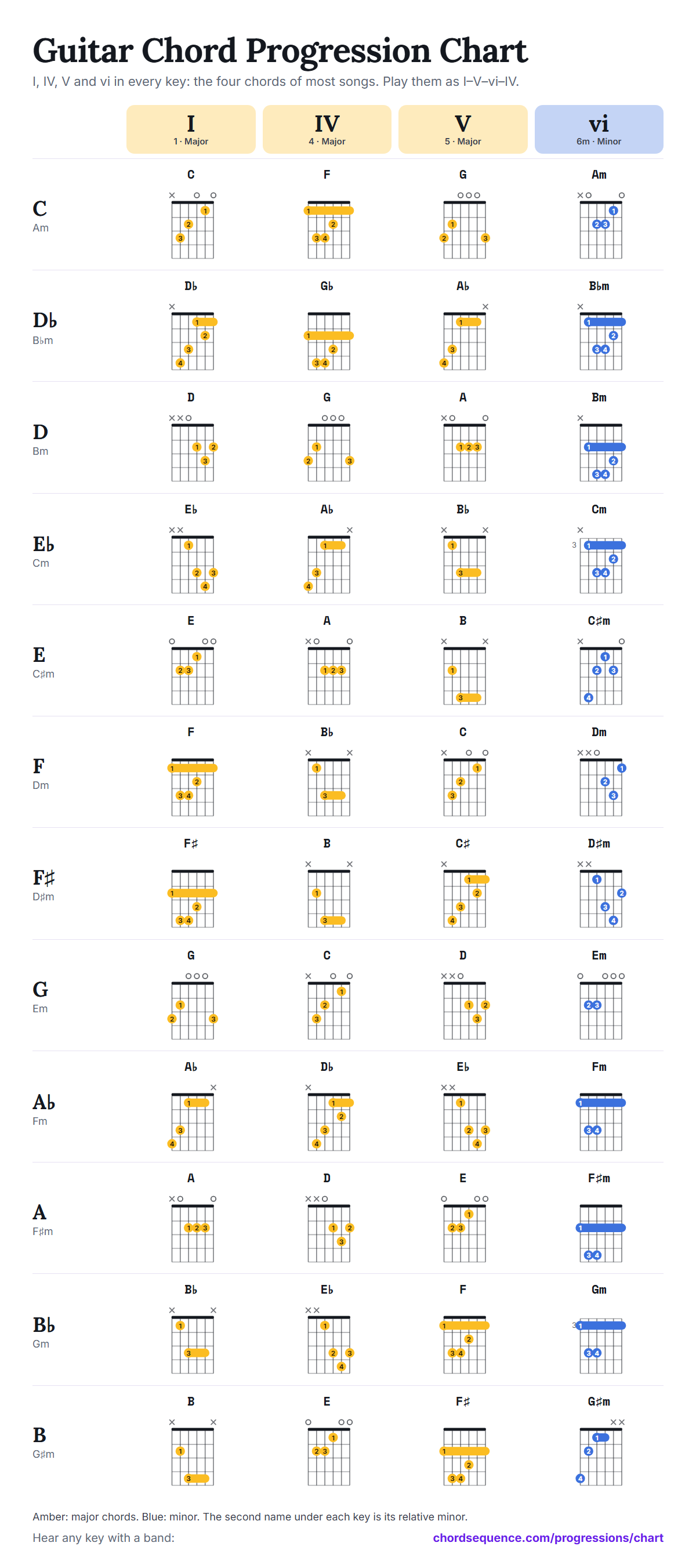
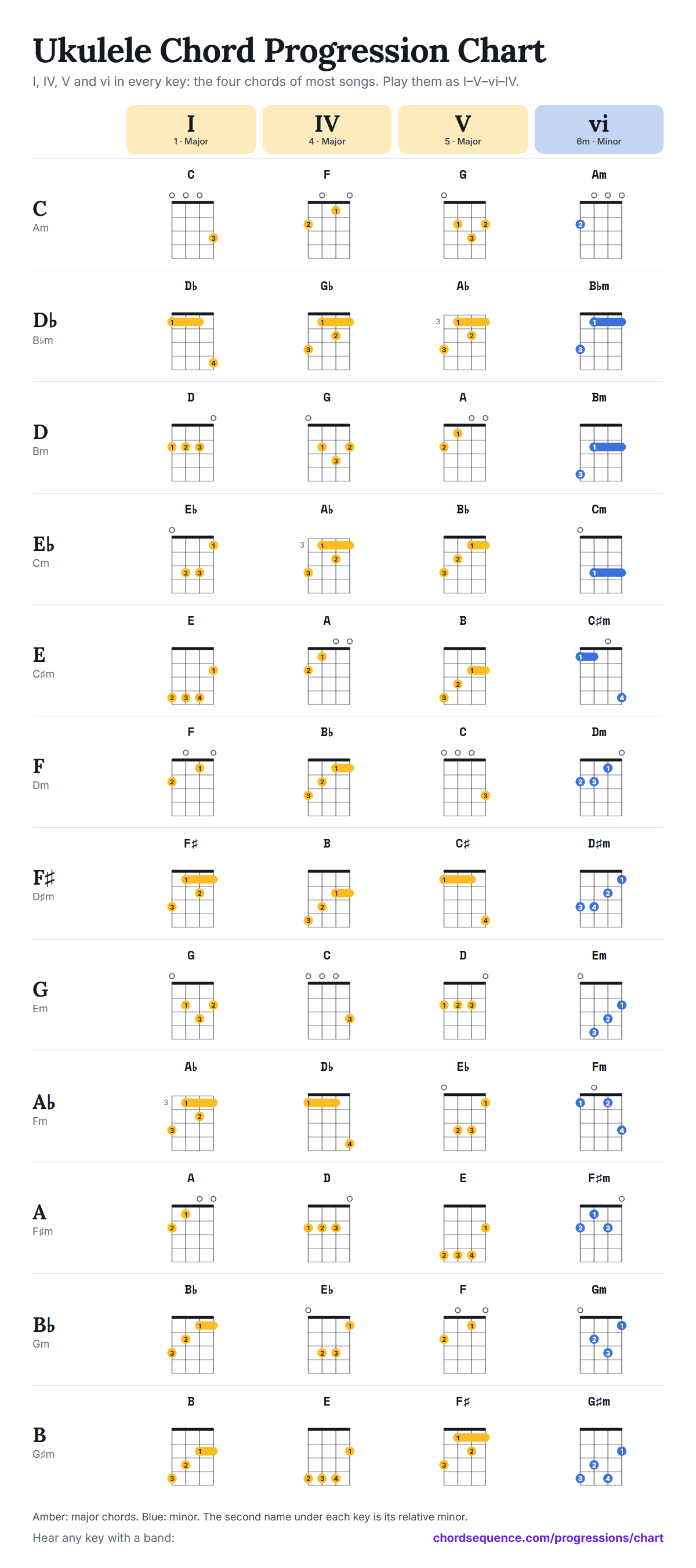
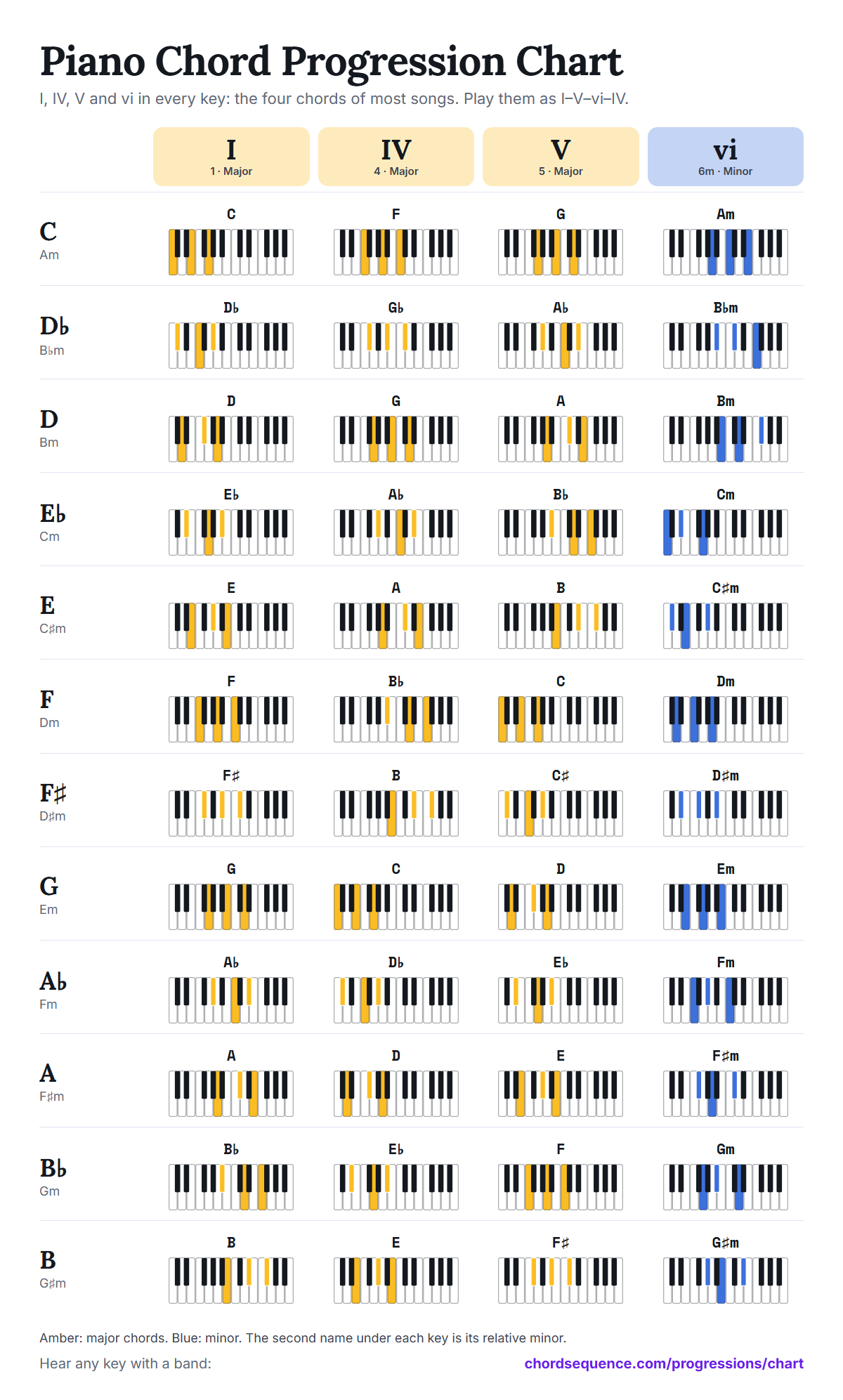
Guitar, ukulele and piano chord progression chart
Most of the progressions above use just four chords: I, IV, V and vi. Here is how to play them in every key, coloured by type, with each key playable as I–V–vi–IV.
- CAm
IC IVF VG viAm - DBm
ID IVG VA viBm - GEm
IG IVC VD viEm - AF♯m
IA IVD VE viF♯m
Press play on any key to hear its four chords as I–V–vi–IV. The second line under each key is its relative minor, the vi.
Chord progression map: which chord comes next
In a major key the chords tend to flow one way, from iii toward I: iii → vi → ii or IV → V or vii° → I, and from I you can go anywhere. Tap the chords to hear them and build a progression that follows the map.
Tap a chord to hear it and start a progression. I is a good place to begin.
and from I, anywhere
usually next also common
The map, chord by chord
- I → any chord Home. It can go to any chord.
- ii → V or vii° Prepares the dominant: goes to V or vii°.
- iii → vi (also IV) Leads to vi, sometimes to IV.
- IV → V or vii° (also I or ii) Moves away from home: to V or vii°, or back to I or ii.
- V → I (also vi) The strongest pull home: to I, or to vi for a surprise.
- vi → ii or IV Goes to ii or IV, the chords that lead to V.
- vii° → I Resolves to I.
Common chord progressions in every minor key
A minor key counts from its own i, so in A minor the VII is G. A capital V is the major chord of harmonic minor, the one that pulls hardest back to i.
| Key | i–iv–v Minor one-four-five | i–iv–V Harmonic minor cadence | i–VI–III–VII Epic minor | i–VII–VI–V Andalusian cadence | i–VI–VII Aeolian rock |
|---|---|---|---|---|---|
| Am | Am – Dm – Em | Am – Dm – E | Am – F – C – G | Am – G – F – E | Am – F – G |
| B♭m | B♭m – E♭m – Fm | B♭m – E♭m – F | B♭m – G♭ – D♭ – A♭ | B♭m – A♭ – G♭ – F | B♭m – G♭ – A♭ |
| Bm | Bm – Em – F♯m | Bm – Em – F♯ | Bm – G – D – A | Bm – A – G – F♯ | Bm – G – A |
| Cm | Cm – Fm – Gm | Cm – Fm – G | Cm – A♭ – E♭ – B♭ | Cm – B♭ – A♭ – G | Cm – A♭ – B♭ |
| C♯m | C♯m – F♯m – G♯m | C♯m – F♯m – G♯ | C♯m – A – E – B | C♯m – B – A – G♯ | C♯m – A – B |
| Dm | Dm – Gm – Am | Dm – Gm – A | Dm – B♭ – F – C | Dm – C – B♭ – A | Dm – B♭ – C |
| D♯m | D♯m – G♯m – A♯m | D♯m – G♯m – A♯ | D♯m – B – F♯ – C♯ | D♯m – C♯ – B – A♯ | D♯m – B – C♯ |
| Em | Em – Am – Bm | Em – Am – B | Em – C – G – D | Em – D – C – B | Em – C – D |
| Fm | Fm – B♭m – Cm | Fm – B♭m – C | Fm – D♭ – A♭ – E♭ | Fm – E♭ – D♭ – C | Fm – D♭ – E♭ |
| F♯m | F♯m – Bm – C♯m | F♯m – Bm – C♯ | F♯m – D – A – E | F♯m – E – D – C♯ | F♯m – D – E |
| Gm | Gm – Cm – Dm | Gm – Cm – D | Gm – E♭ – B♭ – F | Gm – F – E♭ – D | Gm – E♭ – F |
| G♯m | G♯m – C♯m – D♯m | G♯m – C♯m – D♯ | G♯m – E – B – F♯ | G♯m – F♯ – E – D♯ | G♯m – E – F♯ |
Download the charts
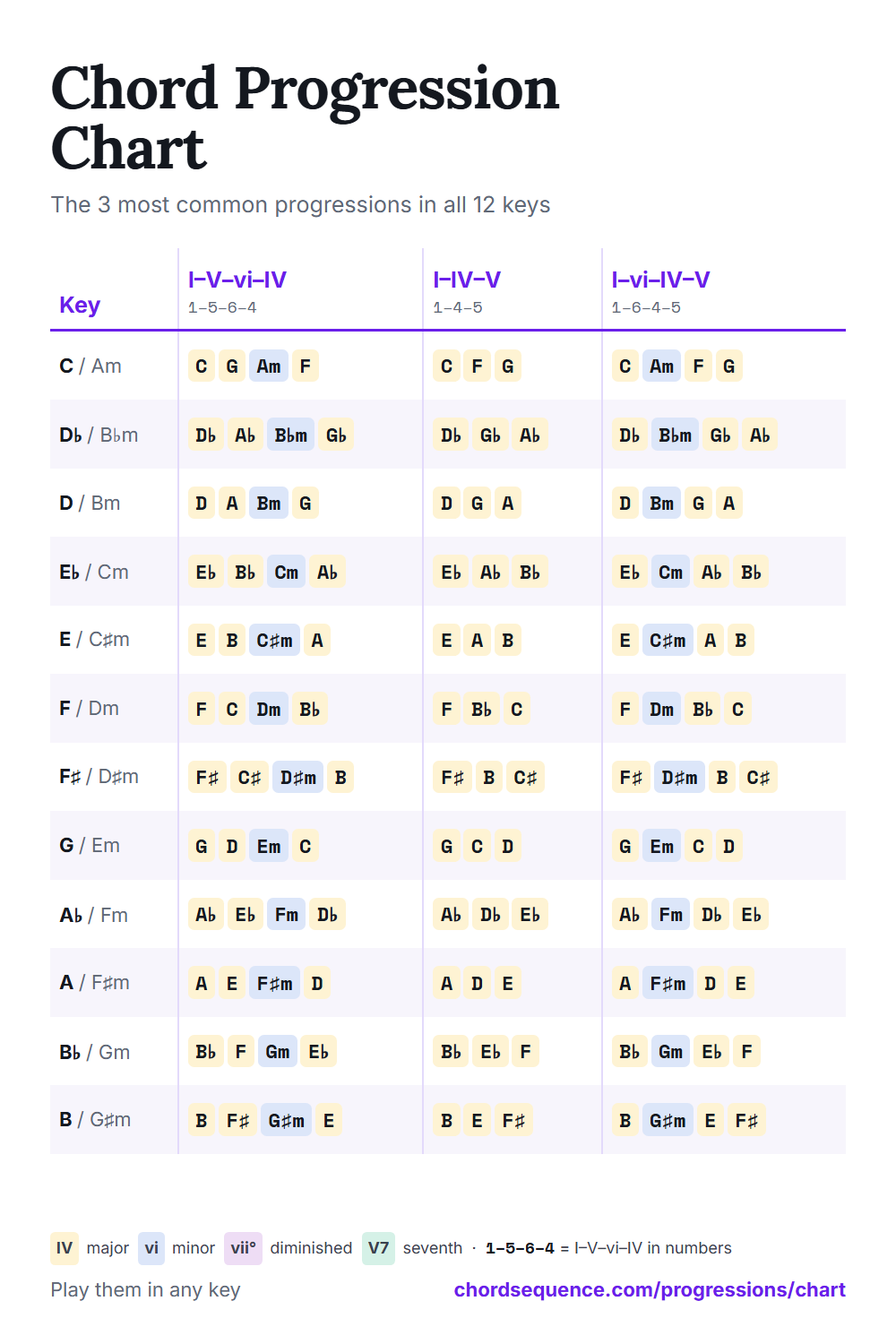
Free to print and share. The PDF has two pages: the major-key chart, then the minor-key progressions and the chords of every key.
Hear every progression
In any key and sound, with guitar, ukulele and piano shapes.
Build your own progression
Start from any of these in the Chord Player and make it a song.
Transpose your own chords
Move any progression to another key, with capo.